
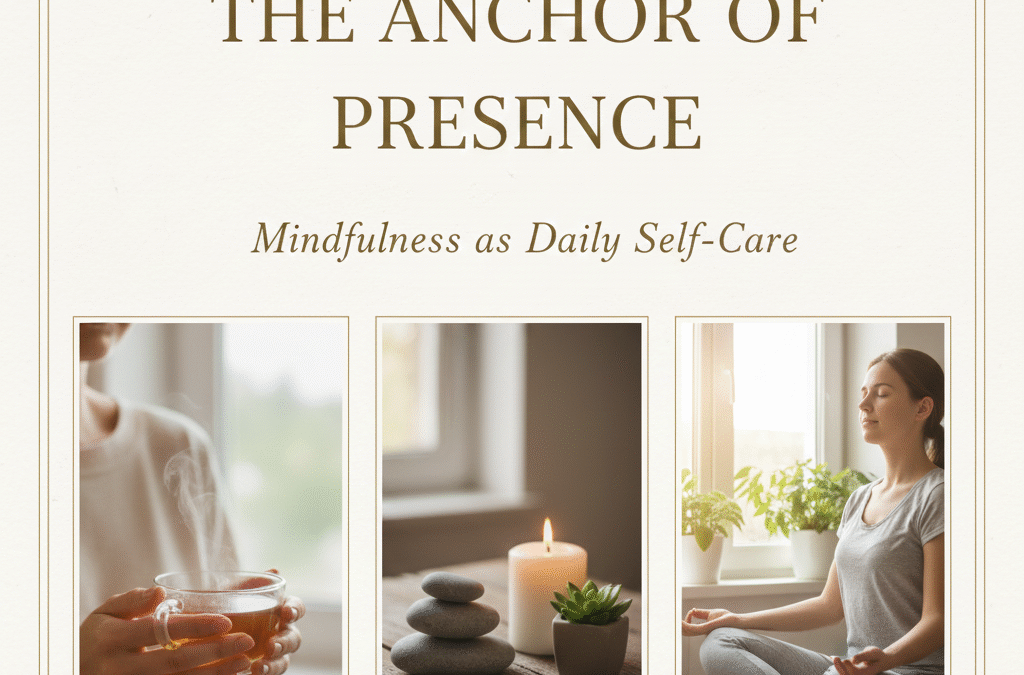
Introduction: Do you ever find yourself arriving at your destination without remembering the drive? Or finishing a meal without actually tasting it? Most of us spend our lives in “auto-pilot,” with our minds either racing toward future worries or looping through past regrets. Mindfulness is the radical act of coming back to the “now.” It isn’t about clearing your mind of all thoughts; it’s about observing your thoughts without getting swept away by them. In this post, we explore how mindfulness acts as an emotional anchor, helping you stay steady even when life feels turbulent.
The Science of Staying Present Mindfulness isn’t just a spiritual concept; it has measurable effects on the brain. Regular practice has been shown to shrink the amygdala (the brain’s “fear center”) and thicken the prefrontal cortex (the area responsible for focus and emotional regulation).
- Reducing Reactivity: When you are mindful, you create a “gap” between a stressful event and your reaction to it. Instead of snapping when someone cuts you off in traffic, you notice the anger rise, breathe, and choose a calmer response.
- Ending the “Rumination Loop”: Mindfulness teaches you that thoughts are just mental events—they aren’t necessarily facts. This realization is incredibly freeing for anyone prone to overthinking.
Micro-Mindfulness: Practices for Busy People You don’t need to sit on a cushion for an hour to be mindful. You can integrate it into your existing routine:
- The Senses Check-In (5-4-3-2-1): When feeling overwhelmed, name 5 things you see, 4 you can touch, 3 you hear, 2 you smell, and 1 you can taste. This pulls you out of your head and back into your body.
- Mindful Eating: For at least five bites of your lunch, put down your phone and notice the texture, temperature, and flavor of the food.
- The Red Light Breath: Use every red light or “loading” screen as a cue to take three deep, intentional breaths.
Mindfulness vs. Meditation While meditation is a specific exercise (like going to the gym), mindfulness is a way of living (like being fit). Meditation builds the “muscle” of focus, but mindfulness is how you use that muscle throughout your day to stay calm, focused, and appreciative of the small moments that make life worth living.
Conclusion: Life is only ever happening in the present moment. When we aren’t mindful, we miss our own lives. Mindfulness is the ultimate self-care because it allows you to actually experience the peace and joy you are working so hard to create. Today, try to do one mundane task—like washing the dishes or walking to your car—with 100% of your attention. Notice what changes.