
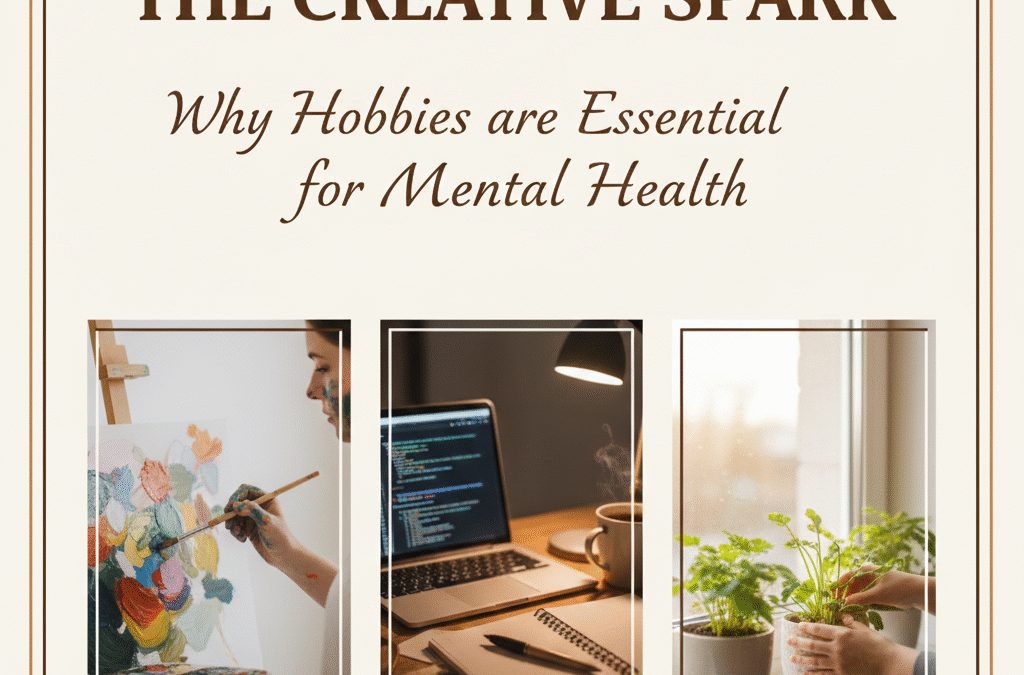
Introduction: In our adult lives, we often categorize activities into two groups: “productive work” or “passive rest” (like watching TV). We’ve forgotten a crucial third category: Active Play. Intellectual self-care involves engaging your brain in something challenging, creative, and completely useless for your bank account. Whether it’s painting, coding a side project, or learning a new language, hobbies provide a “flow state” that allows your brain to recover from the repetitive stress of daily life. Today, we explore why having a “thing” is a vital part of your self-care toolkit.
The Magic of the “Flow State” Psychologist Mihaly Csikszentmihalyi defined “Flow” as a state of total immersion in an activity. When you are in flow, your self-consciousness fades, and your sense of time disappears. This isn’t just a nice feeling; it’s a neurological reset.
- Stress Reduction: Flow states lower cortisol levels and give the “executive function” part of your brain a much-needed break.
- The “Antidote to Anxiety”: It is very difficult for the brain to worry about the future or regret the past when it is fully occupied with the present challenge of a hobby.
Release the Need for Perfection The biggest barrier to creative self-care is the fear of being “bad” at something. We feel that if we aren’t going to be a professional artist, there’s no point in painting. Self-care flips this: the point is the process, not the product.
- “Bad” Art is Good for You: Give yourself permission to make ugly things. The goal is expression, not excellence.
- Learning as Growth: Intellectual self-care can also mean being a “forever student.” Curiosity keeps the brain young and resilient.
How to Reconnect with Your Creative Self
- Look Back to Your Childhood: What did you love doing before the world told you to be “productive”? Usually, that’s where your true interests lie.
- The 20-Minute Rule: You don’t need hours. Just 20 minutes of focused hobby time can significantly boost your mood.
- Low-Stakes Start: Buy a cheap sketchbook, a $10 gardening kit, or download a free language app. Don’t over-invest until you find what sticks.
Conclusion: You are more than your job title, your chores, and your responsibilities. You are a creative being with a natural need to explore and build. Intellectual self-care is the act of honoring that part of yourself. This week, pick up something you used to love—or something you’ve always wanted to try—and do it just for the sake of doing it.