
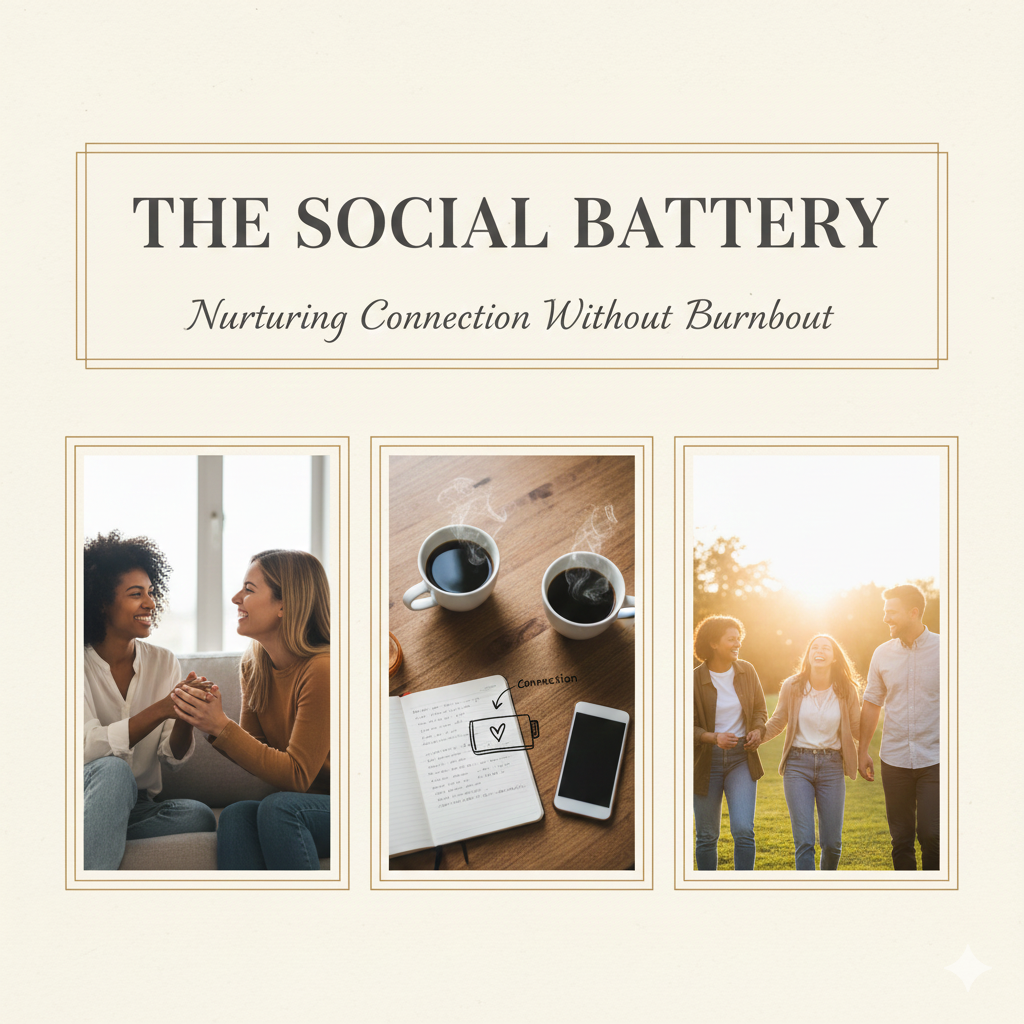
Introduction: In the world of self-care, we often focus on the “self”—solitude, individual routines, and internal reflection. But human beings are inherently social creatures. Our nervous systems are literally designed to co-regulate with others. Social self-care isn’t about being the life of the party; it’s about the quality of your connections and your ability to manage your “social battery.” It’s about finding the balance between the solitude that recharges you and the community that sustains you.
The Biology of Connection When we engage in positive social interactions, our bodies release oxytocin, often called the “bonding hormone.” This hormone acts as a natural buffer against stress, lowering blood pressure and reducing the production of cortisol.
- Co-regulation: Simply sitting in a room with a person you trust can help calm your heart rate and settle your nervous system.
- The Loneliness Risk: Chronic isolation has been linked to health risks equivalent to smoking 15 cigarettes a day. Connection isn’t just a “nice-to-have”; it is a biological necessity.
Managing Your Social Battery Every person has a “social battery”—the amount of energy they have for interacting with others before they feel depleted.
- Know Your Type: Extroverts tend to gain energy from being around people, while introverts gain it from being alone. Understanding where you fall helps you schedule your week without hitting a wall.
- Quality Over Quantity: Social self-care doesn’t mean having a packed calendar. One deep, vulnerable conversation with a close friend is often more restorative than five superficial happy hours.
- Audit Your Circle: Not all connections are equal. Notice who leaves you feeling energized and who leaves you feeling drained. Self-care may involve distancing yourself from “energy vampires” to make room for “radiators.”
The Art of Asking for Help Perhaps the highest form of social self-care is the ability to be vulnerable. Many of us feel that self-care means being “self-sufficient,” but true strength lies in saying, “I’m struggling, and I need a hand.” Allowing others to support you strengthens the bond and relieves the pressure of carrying everything alone.
Conclusion: You don’t have to do life by yourself. Social self-care is about building a support system that feels like a safety net rather than a cage. This week, reach out to one person who makes you feel safe and seen. Send a text, grab a coffee, or have a quick phone call. Your social battery might just need a little “community charging.”